GFAR Talks is a showcase for debate on challenging and provocative topics related to agrifood system transformation, climate change and innovations in agriculture.
What do we mean by `food security’? The term first appeared in 1974 when the World Food Conference defined it as “availability at all times of adequate world food supplies of basic foodstuffs to sustain a steady expansion of food consumption and to offset fluctuations in production and prices.” This definition was aimed at ensuring the global supply, availability and stable price of basic foods and said nothing about individual needs and preferences for different kinds of foods or their geographical distribution. In 1983, FAO introduced a new definition that reflected the balance between the demand and supply of food; “ensuring that all people at all times have both physical and economic access to the basic food that they need”. Again, whilst it mentions access to `basic food’ it says nothing about the nutritional quality of that food nor its consequences for health and lifestyles. In 1996, the World Food Summit supported a new definition; “food security exists when all people, at all times, have physical, social and economic access to sufficient, safe and nutritious food which meets their dietary needs and food preferences for an active and healthy life.” This definition introduces the concept of nutrition as a prerequisite of food security. Having enough food to eat is not enough: it must be safe, nutritious and desirable. Put simply, wherever and whenever food is unavailable, unsafe, unhealthy or undesirable, we have food insecurity.
Since the Green Revolution, food production, and the research, education, investment, advocacy and marketing that have underpinned it, has focused on the 1974 definition of food security by ensuring the supply of enough calorie-rich staple crops (`basic foodstuffs’) at an affordable price for a growing population. By this definition, the world is now food secure – in fact we currently produce more than enough calories for nearly 8 billion people. Because it refers to `world food supplies’ the definition takes no account of who produces the food nor who consumes it – a global total is good enough. The war in Ukraine has alerted us to the perils of relying on a few exporting countries to produce a few staple crops to feed billions of people far from where they are grown. At the same time, there are huge disparities between those who consume too little or too much food and the quality of the food that they eat. This brings us to the challenge of `sufficient, safe and nutritious food’ embedded in the 1996 definition. In 2019, over 820 million people were underweight and went to bed hungry. However, even more people are now overweight or even obese because they eat too much. In 2019, 2 billion adults, 207 million adolescents, and 155 million children were overweight or obese. Overweight and obesity is not just a problem of economic development. Of those under-fives who were overweight, three quarters were in Asia. Whether under or overweight, more than a third of humanity suffers from malnutrition and whilst this is visible in those who are underweight, it may not be obvious in those who are apparently well fed. However, both are hungry for nutrition. Hunger can exist in an individual who eats enough or even too much food but is hungry for nutrients because they consume calorie-rich and often highly processed foods. An individual may not be physically hungry but their poor diet means that they are still food insecure through` hidden hunger’. This phenomenon occurs when food is deficient in micronutrients such as vitamin A, iodine, and iron that are essential for growth, development and the ability to work. The prevalence of hidden hunger across societies, geographies and economic groups provides a common link between malnutrition in those who lack access to enough healthy food and those who eat too much unhealthy food.
We can now see that malnutrition exists in those who eat too little, those who eat too much and those who eat bad diets and suffer from hidden hunger. Together, they represent the `triple burden of malnutrition’. To address this triple burden, we must step outside our disciplinary, geographical and economic silos, beyond our institutional, ethnic and regional loyalties and seek common approaches, priorities and actions based on evidence not advocacy. We must move beyond aiming at overall food security for the world to ensuring nutritional security for each of us. As with many global issues, it is tempting to seek simple solutions to complex problems. Why not simply feed the underfed and persuade those who are overweight to eat less? Looking for more nuanced policies, we might also link underconsumption with poverty, food insecurity and infection, and overconsumption with affluence, junk foods and sedentary behaviour. However, both can occur within communities, families and even individuals at different stages of their lives. In fact, malnutrition is a global issue that affects people irrespective of location, nationality, socio-economic status, sex or gender or whether they live alone, in large households or communities. What we really need to focus on is complementary approaches to achieving one goal – nutrition-for-all - but how?
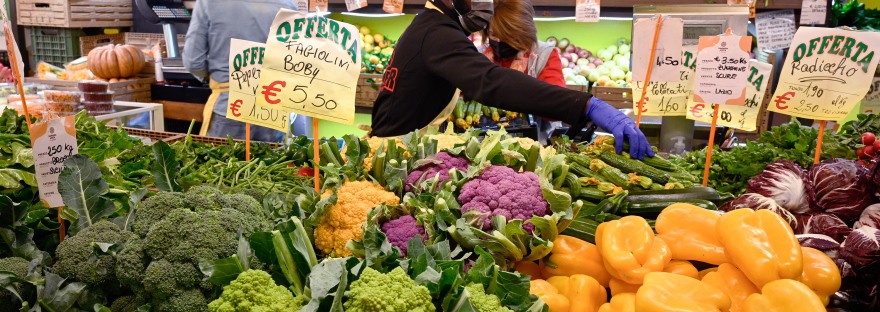
We can make our food more nutritious by supplementing, fortifying, biofortifying or diversifying our diets. Food supplements are marketed in “dose” form (e.g. pills, tablets, capsules, liquids) and can include vitamins, minerals, amino acids, essential fatty acids, fibre and various plant and herbal extracts. Fortification involves adding micronutrients to increase the nutritional content of staple foods or replenish those lost during processing. Fortification can help correct a micronutrient deficiency in the general population, for example by adding nutrients such as folic acid to wheat flour or iodine to salt, or in target groups, such as children and pregnant women. Biofortification involves increasing micronutrient density in widely-consumed crops through plant breeding, agronomy or genetic modification. To date, efforts at biofortification have aimed to increase the levels of specific micronutrients in major crops such as iron-rich beans, cowpeas and millets, zinc-rich maize, rice and wheat, and vitamin A-rich bananas and plantains, maize, cassava and sweet potato. Dietary diversification means increasing the range of food groups that people eat to ensure their proper intake of macro and micronutrients for a healthy life. By eating a variety of foods, diverse diets allow individuals to get different vitamins, minerals, nutrients, and phytochemicals to prevent nutrient deficiencies and chronic diseases without supplementation, fortification or biofortification. Whilst food supplements, and to some extent fortification, play an important role in addressing micronutrient deficiencies through specific health interventions in target populations they are not the primary route to a balanced diet. That leaves two options that can each contribute to healthier outcomes in the general population. We can biofortify the nutrient-poor staples that people already consume and we can diversify diets with nutrient-dense crops beyond mainstream staples. The arguments for biofortification are straightforward. Hidden hunger is a global health crisis, often driven by poverty, and poor people cannot afford healthy diets. Whilst they may be desirable, more than 3 billion people simply cannot afford nourishing, diverse foods for a balanced diet. Biofortification offers a practical solution to hidden hunger for those who eat what they grow or buy calorific staple foods. The logic is that biofortification can make their food more nutritious without changing their dietary habits. However, is a diet based exclusively on biofortified staples healthy? According to the FAO, a healthy diet includes a variety of nutritious, safe and unprocessed or minimally processed foods, and includes wholegrains, legumes, nuts, fruits and vegetables, and moderate amounts of eggs, dairy, poultry and fish and small amounts of red meat. In other words, a healthy diet is a diverse diet and dietary diversity should be the aim of achieving nutrition-for-all. It is clear, however, to provide access to healthy diets, nutritious foods must be available, affordable and desirable. For this, we need complementary, evidence-based approaches that seek to make all foods as nutritious as possible and nutrition-for-all as the overarching goal of food security policies.
So, where are we now on the journey to nutrition-for-all? Since 1996, nutritional security has been essential to achieving global food security. Nutrition also sits at the heart of the United Nations 2030 Sustainable Development Agenda. It goes without saying that SDG 1: `End Poverty in all its forms everywhere’ also requires an end to food poverty but nutrition is explicitly stated in SDG2: `End hunger, achieve food security and improved nutrition and promote sustainable agriculture’. Indeed, the role of nutrition is even clearer in specific targets of SDG2, such as `universal access to safe and nutritious food’, and `end all forms of malnutrition.’ It can be argued that biofortification is a valid, timely and cost-effective strategy towards achieving global food security and the SDGs. However, another target of SDG2 is to `maintain the genetic diversity of seeds, cultivated plants and farmed and domesticated animals and their related wild species, including through soundly managed and diversified seed and plant banks at the national, regional and international levels’. Here, it is difficult to see how biofortifying a limited number of staple crops can enhance the wider genetic diversity of all crop species – indeed by focusing even further on staples, we reduce the incentives for farmers to grow a variety of crops or their communities to consume a range of foods. Furthermore, climate change is already impacting on an agricultural system based on monocultures of mainstream staples. These impacts will become ever greater as long as agriculture remains a primary driver of carbon emissions and land loss - it is hard to see how biofortification by itself can lead to `sustainable food production and resilient agricultural practices’ in hotter, drier and more volatile climates – a biofortified variety of, say, maize that dies from drought cannot contribute to nutritional security whereas a more drought tolerant and nutritious but currently underutilised species could. To achieve global food security and SDG2, we need a variety of nutritious, safe and healthy foods that are available, affordable and desirable from a sustainable and genetically diverse food system – all within seven years!
The recent United Nations `State of Food Security and Nutrition in the World’ report shows that, not only are we far from achieving nutrition-for-all, in many cases we are moving backwards. In 2021, more than 3.1 billion people (42 percent of humanity) couldn’t afford a healthy diet - an increase of 134 million from 2019. In 2022, about 2.4 billion people were moderately or severely food insecure, that is they didn’t have access to nutritious, safe and sufficient food all year round. It is estimated that almost 600 million people will still be facing hunger in 2030 – on our current trajectory we will not even be close to achieving the `zero hunger anywhere’ target of SDG2. So, how can we achieve nutrition-for-all not just now but in the future? First, we must recognise that we cannot achieve this with a business-as-usual food system based only on the same crops, cropping systems, agronomic practices, supply chains, markets and research and extension systems that are the legacy of the Green Revolution. Instead, we need radical solutions that deliver diverse, nutritious diets from climate resilient food systems. This requires a proper assessment of the real costs and benefits of the different methods of increasing the nutrient content of our foods using the best evidence rather than claims, counterclaims and selective examples in favour or against various methods. Instead of using only the price of food (`affordability’) as the main criterion, we need a comprehensive analysis that includes the risks, environmental consequences, societal impacts, and sustainability of continuing with our current model or establishing a different agrifood system based on diverse diets that are healthier for us and less damaging to the planet. This analysis should also provide projections of the costs and benefits of different methods over a timeframe that reflects changes in climate expected by, say, 2050 to provide an evidence base for transition from business-as-usual to a nutrition-for-all economy. This also means moving from the mindset of the 1974 definition of food security (enough basic food for all of us) to the 1996 definition (safe, nutritious and desirable food for each of us). For this transformation, we should be guided by the concept of “food sovereignty” as defined by the US Food Sovereignty Alliance `we believe all people have the right to healthy, culturally appropriate food, produced in an ecologically sound manner’ which means empowering local communities and farmers’ organizations to have agency not just in what they grow but also in what they eat. The cost of food is a political choice. If we can subsidise fossil fuels for the energy sector and calories for the food industry, we can incentivise healthy diets for humanity – that is all of us. If we do not have the political will, leadership and collective actions to achieve nutrition for all of us, we must accept the political, economic and social consequences of ensuring malnutrition for most of us.
Watch the recording of the sixth GFAR Talks webinar, featuring Lynn Brown (HarvestPlus) and Dr Jeremy Cherfas (Agricultural Biodiversity Weblog)
Sources
FAO, IFAD, UNICEF, WFP and WHO. 2023. The State of Food Security and Nutrition in the World 2023. Urbanization, agrifood systems transformation and healthy diets across the rural–urban continuum. Rome, FAO.https://doi.org/10.4060/cc3017e
FAO. Rome Declaration on World Food Security and World Food Summit Plan of Action. World Food Summit 1996 November 13–17. Rome: Food and Agriculture Organization of the United Nations; 1996. http://www.fao.org/wfs/.
FAO, IFAD, UN Children’s Fund, WFP, WHO. The state of food security and nutrition in the world (SOFI) report 2019 — in brief. Rome: Food and Agriculture Organization of the United Nations; 2019. https://docs.wfp.org/api/documents/WFP-0000106760/download/?_ga=2.82667615.870359159.1612941460-968858223.1612941460.
FAO, IFAD, UN Children’s Fund, WFP, WHO. The state of food security and nutrition in the world (SOFI) report 2019 — in brief. Rome: Food and Agriculture Organization of the United Nations; 2019. https://docs.wfp.org/api/documents/WFP-0000106760/download/?_ga=2.82667615.870359159.1612941460-968858223.1612941460
Azam-Ali, S. N. The ninth revolution: transforming food systems for good. 2021 World Scientific. LCCN 2021009911 | ISBN 9789811236440 (hardcover) ISBN 9789811236457 (ebook)
Maarten van Ginkel and Jeremy Cherfas. What is wrong with biofortification. 2023. Global Food Security Volume 37. 100689https://doi.org/10.1016/j.gfs.2023.100689



 blog.gfar.net